

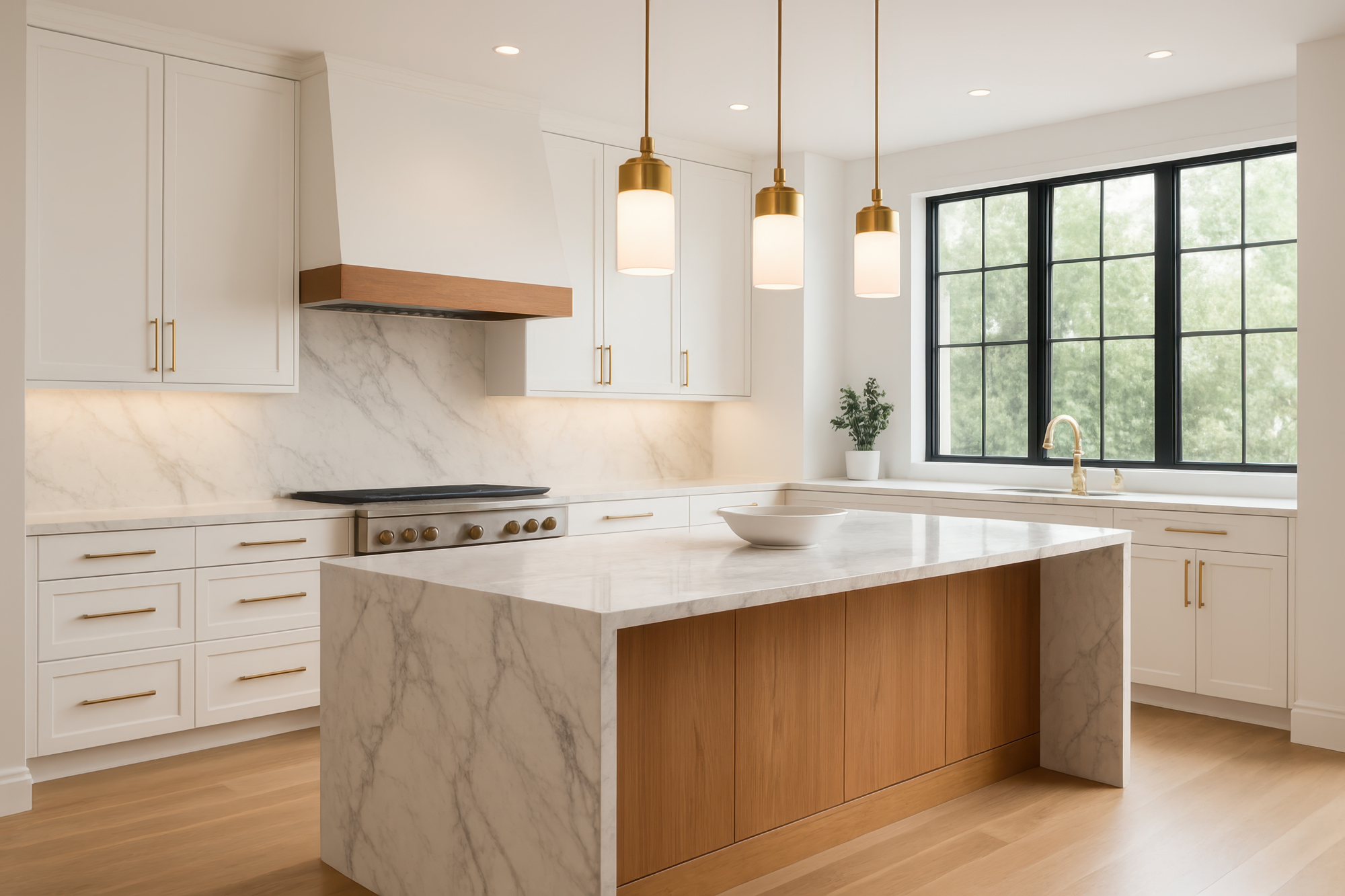
Kitchens see more moisture, more foot traffic, and more dropped items than almost any other room in the house, which is exactly why homeowners hesitate before choosing hardwood there. The good news is that hardwood has been used in kitchens for generations, and with the right product and a few simple habits, it holds up well in that environment.
Why Homeowners Hesitate About Hardwood In The Kitchen
The concern usually comes down to water. A sink that splashes, a dishwasher that occasionally leaks, or a spilled glass of water left unnoticed can all affect wood flooring if moisture sits on the surface too long. That risk is real, but it is also manageable with the right product choice and a bit of everyday awareness.
Scratches from dropped pans or dragged furniture are the other common worry, though this is really no different from the wear hardwood experiences in any busy room of the house. A quality finish and a reasonable amount of care go a long way toward keeping a kitchen floor looking good for years.
How Solid And Engineered Hardwood Handle Kitchen Conditions Differently
Engineered hardwood is generally the better fit for kitchens because its layered core construction resists the expansion and contraction that moisture and temperature swings can cause. That stability matters most directly under a sink or near an exterior door, where small amounts of moisture are simply part of daily life.
Solid hardwood can still work in a kitchen, and plenty of homeowners have installed it successfully, but it is more sensitive to humidity changes and benefits from a drier, more climate controlled kitchen environment. If your kitchen opens directly into a sunroom or has a lot of exterior door traffic, engineered hardwood is usually the safer starting point.
Simple Habits That Protect Hardwood Near Sinks And Appliances
A few small habits make a real difference in how a hardwood kitchen floor performs over time.
Wipe up spills soon after they happen rather than letting water sit on the surface
Use a mat near the sink and dishwasher to catch splashes and drips
Check under the dishwasher and refrigerator periodically for slow leaks
Use furniture pads under kitchen chairs and stools to prevent scratching
None of these habits are unusual or high maintenance. They are the same common sense steps most homeowners already take to protect any nice floor, and they matter most in the specific zones right around water sources.
When Tile Might Be The More Practical Choice For Your Kitchen
Tile is worth considering for kitchens that see heavier water exposure, like a space with a walk out to a pool or a mudroom style entry built into the kitchen layout. It handles standing moisture without the same level of concern hardwood requires, and it holds up well in high humidity conditions.
That does not make hardwood the wrong choice for most kitchens, it simply means the two materials serve slightly different situations well. Many homeowners choose hardwood for the main kitchen footprint and use tile in a connected mudroom or entry where moisture exposure is higher, letting each material do what it does best.
If you are weighing hardwood flooring for your Arlington kitchen or want to talk through whether tile flooring makes more sense for a high moisture layout, Perennial Studios can walk you through the tradeoffs honestly based on how your kitchen actually gets used. We have helped homeowners across
Arlington, TX, Mansfield, TX, Burleson, TX, Kennedale, TX, or Midlothian, TX
choose flooring that fits their daily routine, not just their design board.Visit Arlington, TX to see hardwood and tile samples side by side, or contact us to schedule a free in-home consultation for your kitchen project.


