

Sustainable flooring is one of the biggest themes in design right now, and two options dominate the conversation. Reclaimed oak sounds obviously green, and new engineered hardwood markets itself as the responsible modern choice. The honest answer is more nuanced than either pitch, so here is the math worth running before you decide.
The Case for Reclaimed Oak
Reclaimed oak comes from old barns, factories, and buildings, which means no new tree gets cut to make your floor. The carbon is already locked into wood that would otherwise head to a landfill, and you get dense, slow-grown old timber with character that new wood cannot copy. On paper, that is a strong environmental story.
The catch sits in supply and processing. Reclaimed stock is limited, can carry nail holes and defects, and has to be denailed, kiln-dried, milled, and graded, all of which take energy and labor. Sourcing matters too, since wood trucked across the country to reach you carries a footprint that chips away at the reclaimed advantage.
The Case for New Engineered
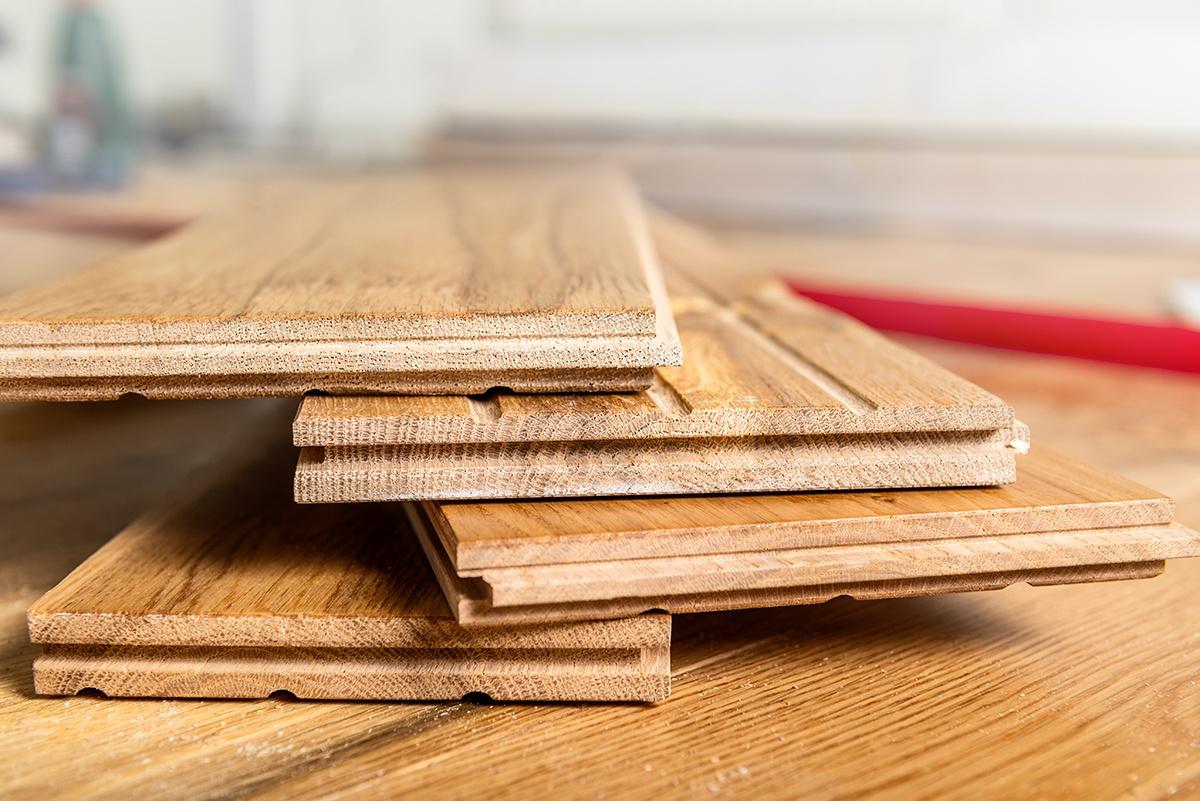
New engineered hardwood uses a thin veneer of real wood over a plywood or fiberboard core, so each plank consumes far less slow-growth hardwood than a solid board. The core often comes from fast-renewing species, and responsibly made lines pair that with FSC-certified wood and low-VOC adhesives. It stretches a limited resource further.
The honest tradeoff is that engineered wood still requires new harvest, factory manufacturing, and adhesives, none of which are zero-impact. Quality varies widely between brands, and a cheap engineered floor with a paper-thin veneer cannot be refinished, which shortens its life and undercuts the green claim.
The Math People Skip
Most comparisons stop at how the material was sourced and never get to the part that matters most, which is how long the floor lasts. A floor that survives forty years and refinishes three times is greener than one replaced twice in the same span, almost regardless of where the raw material came from. Longevity is the variable people leave out.
So the real questions are how thick the wear layer or veneer is, whether the floor can be refinished, how it will hold up on your slab, and how far it traveled to reach you. Run those numbers and the smarter pick often comes down to durability and local availability, not the label on the box.
There is no single greenest floor, only the right floor for your home, your slab, and your priorities. At Perennial Studios, we will lay out the real tradeoffs between reclaimed and engineered, including longevity and sourcing, so you choose with clear eyes.
Visit Arlington, TX to compare both in person, and ask about an in-home estimate. We are proud to serve
Arlington, TX, Mansfield, TX, Burleson, TX, Kennedale, TX, or Midlothian, TX
. To find the floor that fits your values and your home, contact us today.


