

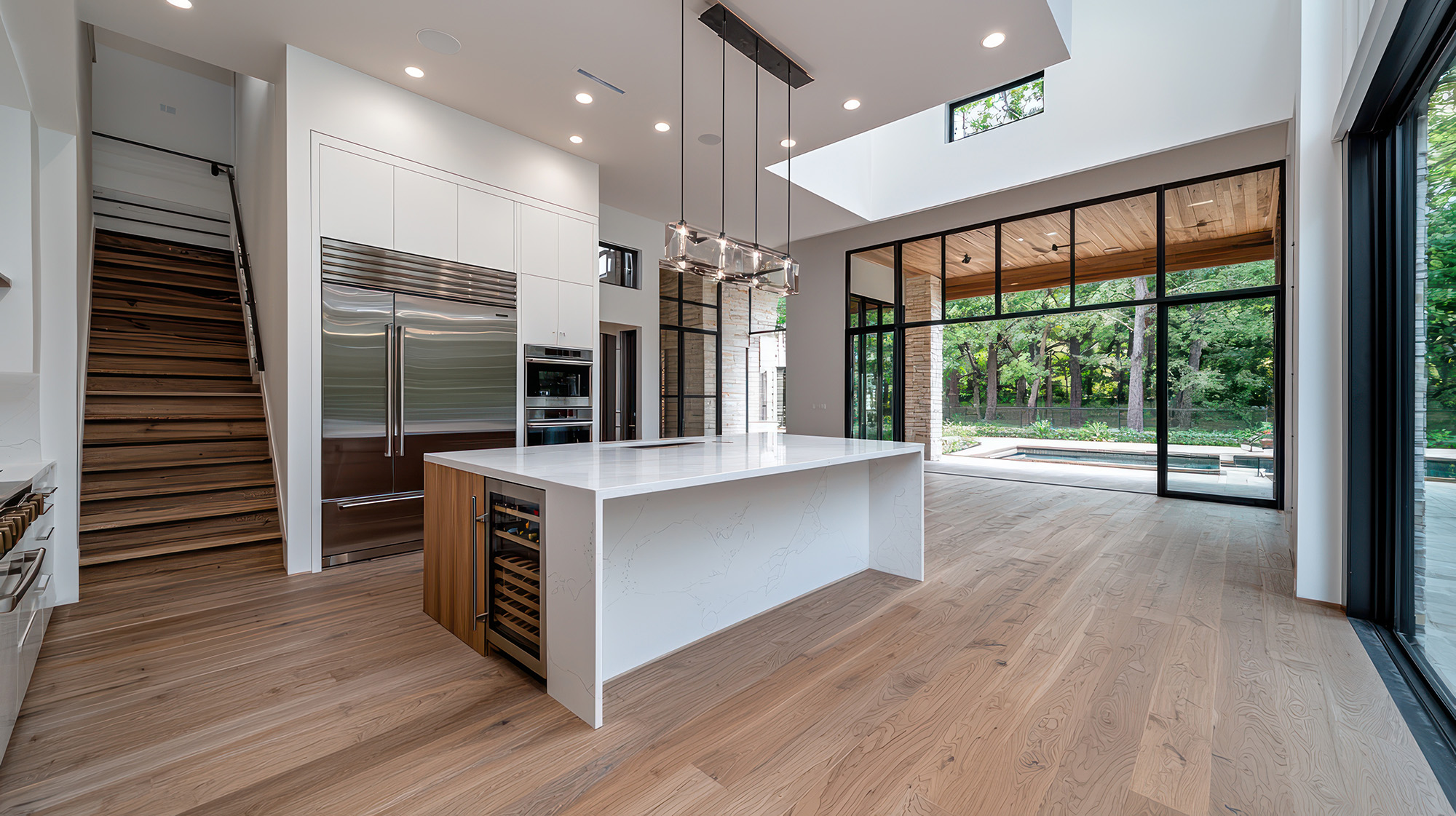
Multi-story homes in Arlington, Mansfield, and surrounding cities face unique flooring challenges: sound control, moisture management, and subfloor transmission. At Arlington, TX, homeowners often realize their underlayment—not their flooring—is the source of noise, vibration, or comfort issues.
Underlayment isn’t padding. It’s a performance layer. And choosing the right one transforms upper floors.
What Underlayment Actually Does
Reduces impact noise
Controls airborne sound
Stabilizes floating floors
Prevents moisture wicking
Increases comfort underfoot
Extends flooring life
Key Underlayment Types Explained
1. Acoustic Underlayments (IIC & STC Rated)
Ideal for bedrooms, lofts, upstairs playrooms.
Look for:
IIC 65+
STC 60+
These ratings determine how much noise passes through ceilings.
2. Moisture-Barrier Underlayment
Critical over second-floor bathrooms or laundry rooms.
Protects wood subfloors from long-term damage.
3. Cork Underlayment
Premium choice for sound, thermal insulation, and eco-performance.
Amazing under engineered hardwood.
4. Rubber Underlayment
Top-tier sound control, great for high-traffic upstairs areas.
5. Foam Underlayment (Budget Option)
Useful only for basic floating floors with low traffic.
Using the Wrong Underlayment for the Wrong Floor
Underlayment is not universal.
Cork under SPC? Wrong.
Foam under tile? Wrong.
Moisture-only barrier under hardwood? Wrong.
Each flooring type requires a specific pairing (which Perennial Studios helps homeowners match correctly).
Why Upper Floors Need Special Attention in Texas Homes
Multi-story homes here face:
Framing flex
HVAC humidity cycling
Seasonal contraction
Upstairs plumbing lines
Open floor plans amplifying sound
Underlayment is your only real line of defense.
For precise guidance on what underlayment your home actually needs, visit or call Perennial Studios. We proudly serve Arlington, TX, Mansfield, TX, Burleson, TX, Kennedale, TX, or Midlothian, TX


