

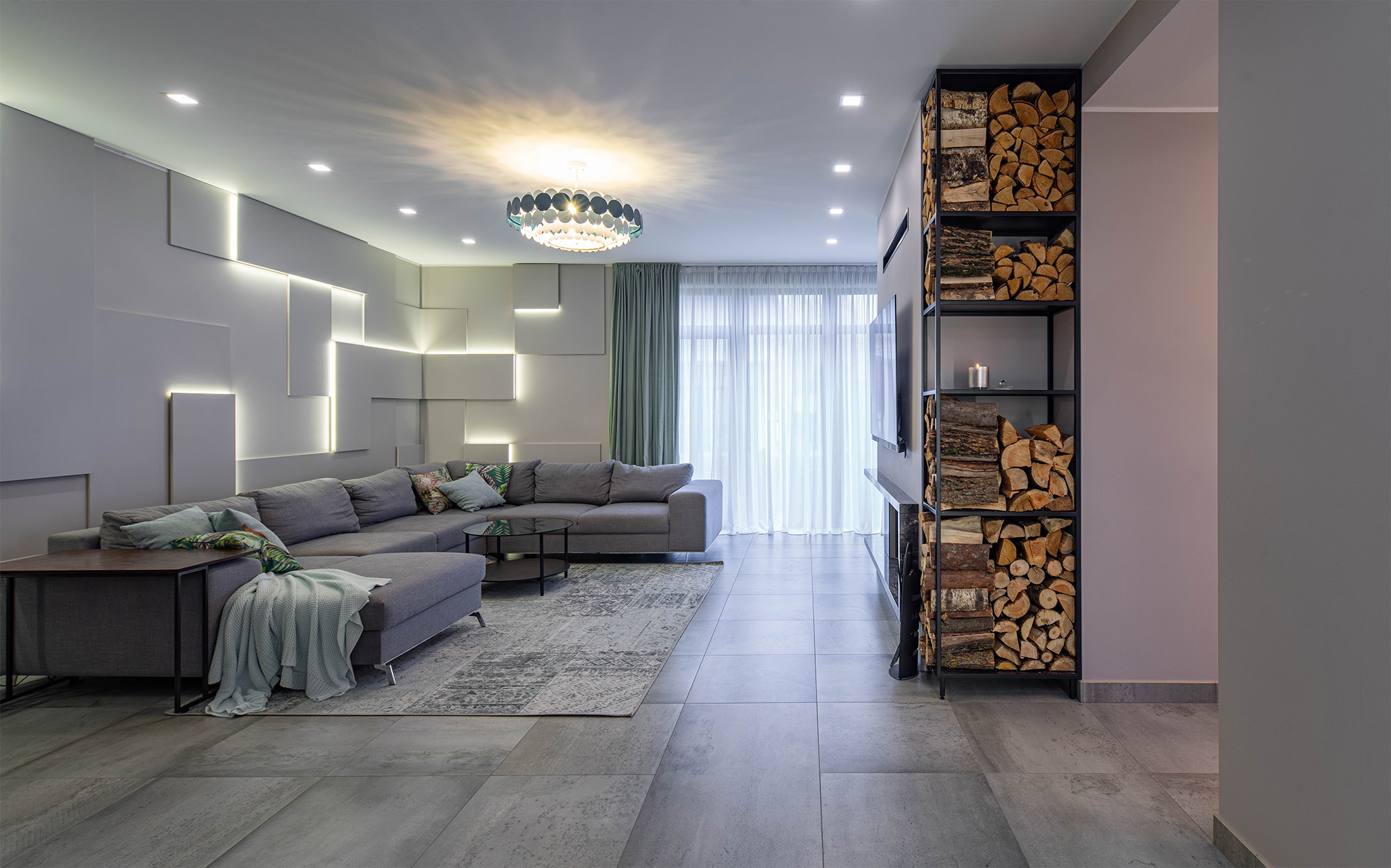
Homeowners in Arlington often notice this most in winter mornings, when the air feels warm but the floor still feels like it belongs in a walk in cooler. The reason has less to do with your heating system and more to do with how tile handles heat compared to other materials.
Thermal Mass And Why Tile Behaves Differently Than Wood
Tile has high thermal mass, meaning it absorbs and holds temperature rather than reacting quickly to the air around it. Wood and carpet insulate against your body heat, so they feel warmer to the touch even at the same air temperature, while tile actively pulls heat away from your skin because it conducts so efficiently.
This is the same property that makes tile feel pleasantly cool in July and noticeably cold in January. Nothing is malfunctioning. The material is doing exactly what dense, conductive stone and porcelain are supposed to do, and it will always feel different underfoot than the wood floor in the next room.
Slab On Grade Construction And Heat Loss Underneath
Most homes in Arlington are built on a concrete slab rather than a raised foundation, and that slab sits in direct contact with the ground below it. Ground temperature stays cooler than room temperature for most of the year, so the slab constantly pulls heat downward and out of your living space through the floor.
Tile installed directly over that slab has almost nothing between it and that cold mass except thin-set mortar. Without added insulation or a thermal break, your HVAC system is heating the air in the room while the slab quietly works against it from below, which is exactly why the floor lags behind the rest of the house.
Radiant Heating And Underlayment Options
In-floor radiant heating solves this problem directly by placing electric heating cables or hydronic tubing under the tile itself, warming the slab from within rather than relying on air temperature alone. It is a popular addition during renovations in bathrooms and kitchens, where bare feet spend the most time on tile.
Insulating underlayment membranes are a lower cost alternative that create a thermal break between the tile and the slab, reducing how much heat the concrete pulls away. These membranes also add a layer of crack isolation, which is a useful bonus in North Texas homes where slab movement is common.
Rugs Vents And Practical Fixes That Actually Help
If a full underlayment upgrade is not in the budget right now, targeted area rugs in high traffic zones like the kitchen sink area or bathroom vanity make a noticeable difference without any construction. Placing floor vents so warm air blows across the tile surface, rather than only into open room space, also helps more than most homeowners expect.
Closing blinds at night and opening them during sunny winter days lets tile near windows pick up passive solar warmth, which is a small habit that adds up over an entire season. None of these fixes change the physics, but together they close most of the comfort gap homeowners actually notice day to day.
If you are planning new tile flooring for your Arlington home and want to talk through radiant heat, underlayment, or simply which tile feels least cold underfoot, Perennial Studios can help you weigh the real tradeoffs before you buy. We install and advise on comfort focused tile systems throughout
Arlington, TX, Mansfield, TX, Burleson, TX, Kennedale, TX, or Midlothian, TX
every season of the year.Visit Arlington, TX to feel sample tiles firsthand, or contact us to schedule a free in-home consultation and get a plan built around how your home actually feels, not just how it looks.


